Home / Applications / New construction
New construction & walls
Build it tight from day one.
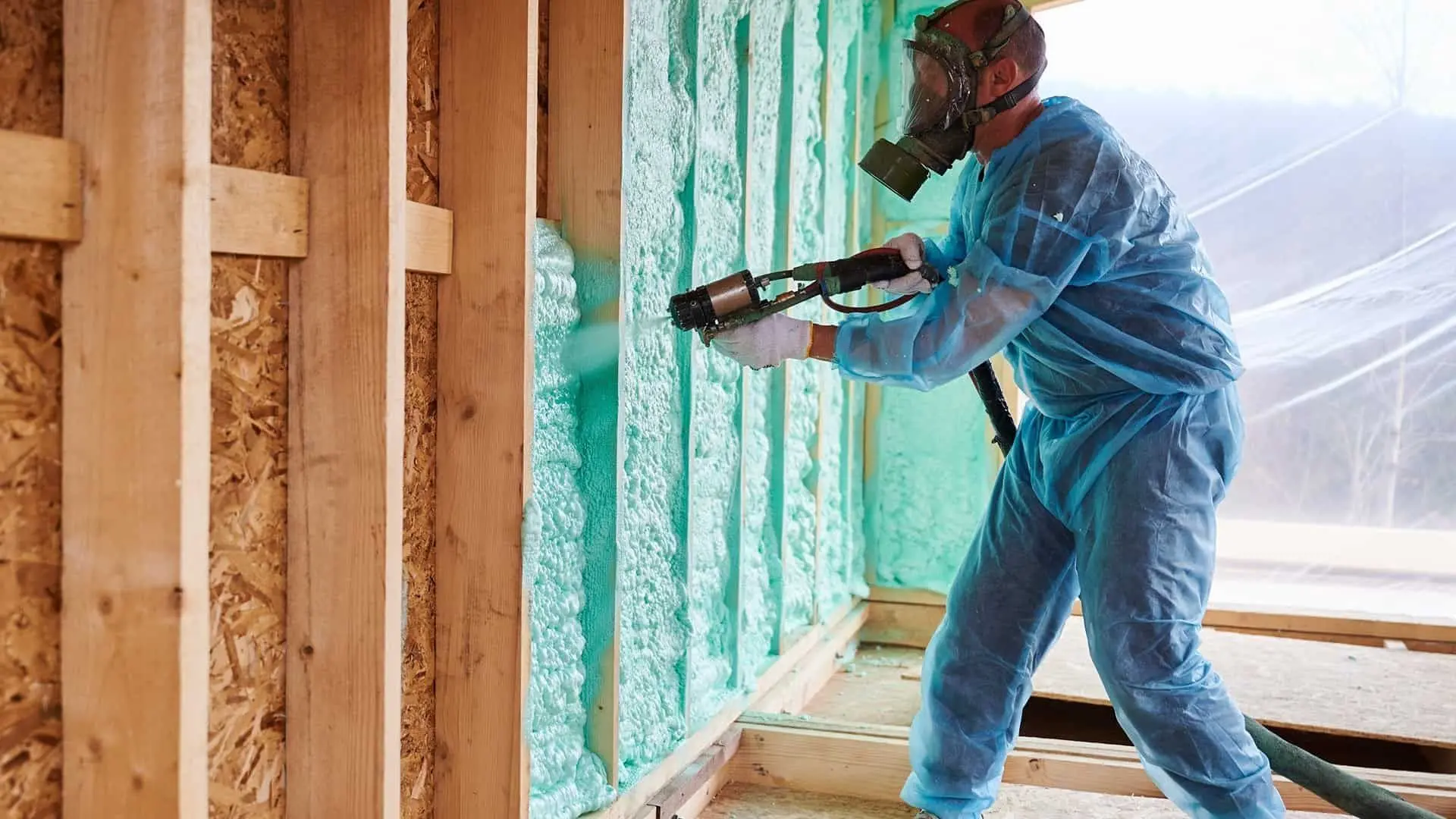
Building or remodeling? Spray foam in open stud walls, rim joists and roof lines creates the tightest, quietest, most efficient building envelope you can get — before the drywall goes up.
- Homes, additions & barndominiums
- Works with your builder’s schedule
- Open- or closed-cell options
Why foam in new builds
You only get one chance to insulate open walls.
Once the drywall is up, the envelope is locked in for decades. Spray foam makes it count.
Air-tight from the start
Foam seals around framing, wiring, plumbing and window openings as it goes on — no separate caulk-and-tape marathon.
Right-sized HVAC
A tighter, better-insulated envelope may let your HVAC contractor right-size equipment instead of oversizing it.
Quieter rooms
Open-cell foam in exterior and interior walls dampens outside noise and sound between rooms.
Stronger walls
Closed-cell foam bonds to studs and sheathing and adds racking strength to the wall assembly.
Moisture-smart assemblies
We match the foam to the wall assembly so moisture is managed — not trapped.
Won’t sag or settle
Unlike batts or loose fill, cured foam stays put for the life of the building.
Our approach
When the foam goes in
- After the building is dried-in: roofing, windows and exterior doors installed
- After rough-in plumbing, electrical and HVAC (and inspections, where required)
- Before drywall — we coordinate directly with your builder or GC
- Rim joists, walls and roof lines handled in one visit when possible
Remodeling?
Open walls are an opportunity.
A remodel or addition is the perfect chance to add spray foam. For finished walls that won’t be opened, we’ll talk through the options during your estimate.
- Additions & bonus rooms
- Gut remodels
- Garage conversions
- Barndominiums & shop homes
How it works
Simple from start to finish.
Request your estimate
Fill out the quick form with a few details about your home or building. It takes about a minute.
On-site assessment
We look at the space, talk through your goals and recommend the right foam and thickness — with a clear written quote.
Prep & install
The area is protected and the foam is applied by trained applicators in full protective gear. Many projects wrap up in a day or two.
Feel the difference
Cleanup, a final walk-through, and a quieter, more comfortable, more efficient space from day one.
FAQ
New construction spray foam questions
When should spray foam be installed during construction?
After the building is dried-in and rough-in plumbing, electrical and HVAC are complete (and inspected, where required) — but before drywall. We’ll coordinate timing with your builder.
Open-cell or closed-cell for walls?
Open-cell is a popular, cost-effective choice for walls with excellent sound dampening. Closed-cell delivers more R-value per inch and adds strength — useful in 2×4 walls or where moisture resistance matters. Many builds use both.
Can you spray foam into existing finished walls?
Spray foam is applied to open cavities. For finished walls that won’t be opened, we’ll talk through alternatives during your estimate.
Do you work with builders and contractors?
Yes. We work with homeowners, builders and general contractors, and we schedule around your construction timeline.
Free new construction estimate
Building or remodeling? Get a free estimate.
Tell us what you’re working on. We’ll follow up to schedule a free on-site assessment and give you a clear, written quote — no pressure, no obligation.
- Free on-site assessment & written quote
- Honest open-cell vs. closed-cell recommendation
- Homes, pole barns, shops & commercial buildings
Get your free estimate
Tell us about your project and we’ll reach out to set up your free, no-pressure assessment.
More applications