Home / Applications / Attic
Attics & roof decks
Attic spray foam that keeps the heat where it belongs.
Your attic is where summer heat pours in and winter heat escapes. Spray foam on the roof deck or attic floor seals it off — for cooler upstairs rooms, an easier-working HVAC system and lower bills.
- Roof-deck or attic-floor options
- Seals can lights, top plates & hatches
- Free on-site assessment
Why the attic matters
The attic is the biggest leak in most homes.
Heat rises, attics bake, and every gap in the ceiling becomes a chimney for the air you paid to heat or cool.
Hot upstairs bedrooms
On a Springfield summer afternoon an unsealed attic bakes — and that heat radiates straight into the rooms below.
Leaks you can’t see
Recessed lights, wiring holes, top plates and attic hatches leak conditioned air into the attic all day long.
Ductwork in the attic
If your HVAC ducts run through the attic, sealing the roof deck brings them inside the conditioned space so they stop losing energy.
Cold winter ceilings
Air sealing the attic keeps warm air in the living space instead of escaping up through the ceiling.
Moisture in the attic
Warm, moist indoor air leaking into a cold attic can condense under the roof. Sealing the leaks helps stop it at the source.
A quieter home
Foam at the roofline dampens the sound of rain, wind and traffic.
Our approach
Two ways to foam an attic
- Roof deck (conditioned attic): foam goes on the underside of the roof, bringing the whole attic — and any ductwork — inside the envelope. Often open-cell; closed-cell where more R per inch or moisture resistance is needed.
- Attic floor (vented attic): foam seals and insulates the ceiling plane between you and the attic, leaving the attic vented as-is.
- We recommend the right approach based on where your HVAC lives, your roof and your goals.
What’s included
No surprises.
- Inspection of your current insulation and ventilation
- Removal of old insulation when needed — quoted up front
- Protection of your home and belongings during install
- Ignition or thermal barrier requirements addressed
- Cleanup and a final walk-through
How it works
Simple from start to finish.
Request your estimate
Fill out the quick form with a few details about your home or building. It takes about a minute.
On-site assessment
We look at the space, talk through your goals and recommend the right foam and thickness — with a clear written quote.
Prep & install
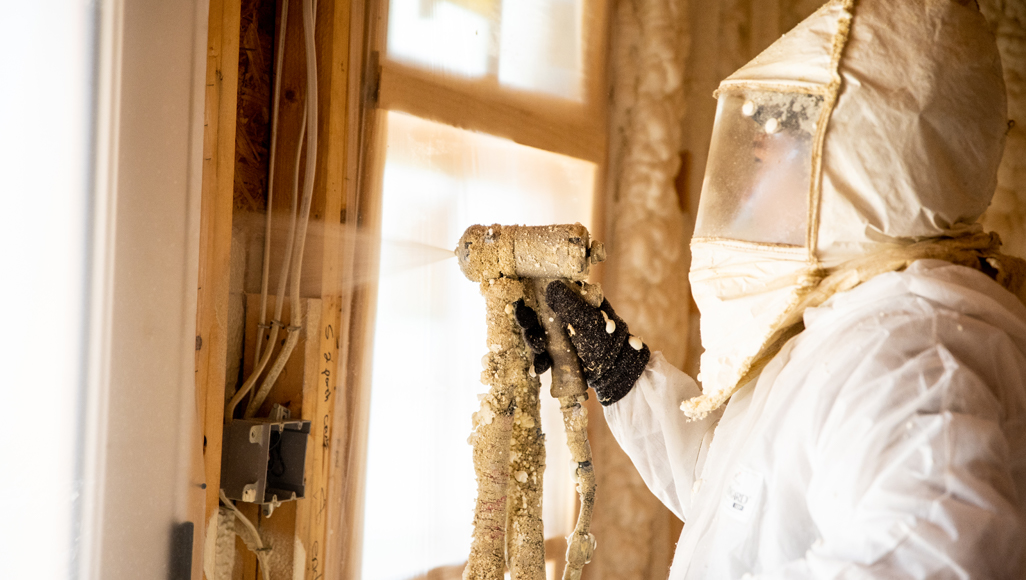
The area is protected and the foam is applied by trained applicators in full protective gear. Many projects wrap up in a day or two.
Feel the difference
Cleanup, a final walk-through, and a quieter, more comfortable, more efficient space from day one.
FAQ
Attic spray foam questions
Should I insulate the roof deck or the attic floor?
If your HVAC equipment or ductwork is in the attic, foaming the roof deck usually makes the most sense — it brings that equipment inside the conditioned space. If the attic is empty, sealing and insulating the attic floor can be a cost-effective option. We’ll walk you through both during your estimate.
Do I need to remove my old attic insulation?
Often, yes — especially for roof-deck applications or when the existing insulation is damaged, compressed or contaminated. Any removal is included in your written quote so there are no surprises.
Will my attic still need vents?
When foam is applied to the roof deck, the attic becomes part of the conditioned space and is typically sealed rather than vented — building codes recognize unvented attic assemblies. Attic-floor applications keep your existing ventilation.
How long does an attic project take?
Many attic projects are completed in about a day, depending on size, access and whether old insulation needs to be removed first.
Free attic estimate
Get a free attic insulation estimate.
Tell us what you’re working on. We’ll follow up to schedule a free on-site assessment and give you a clear, written quote — no pressure, no obligation.
- Free on-site assessment & written quote
- Honest open-cell vs. closed-cell recommendation
- Homes, pole barns, shops & commercial buildings
Get your free estimate
Tell us about your project and we’ll reach out to set up your free, no-pressure assessment.
More applications